TSMC Optimizes Control Equipment Treatment System to Achieve 90% Reduction Rate for N2O

TSMC is committed to achieving the goal of minimal air pollutant emissions, while actively strengthening the treatment performance its control equipment. In addition to reducing NOx emissions by 60%, TSMC cooperated with suppliers to initiate the "N2O reduction project" to improve air emissions quality by retrofitting on-site electric heating treatment equipment. Testing by the third-party verification department of the Industrial Technology Research Institute (ITRI) showed that the N2O reduction rate of electric-heating local scrubbers increased from 42% to 90%, and NOx discharge was further reduced by 40%. It also passed the SEMI S2 and feasibility review by TSMC's New Tool and New Chemical Review Committee. As of October 2025, it has been introduced into Fab 12A, Fab 12B, Fab 14A, Fab 14B, Fab 15A and Fab 15B and included in the standard design for new fabs to improve their air pollution processing ability.
Advanced Pyrolysis Technology for Improved Tail Gas Abatement Effectiveness
Different tail gases are generated from wafer manufacturing, and TSMC uses appropriate local scrubbers for burning and reduction of these gases based on their characteristics. Due to the insufficient burning temperature of existing electric-heating local scrubbers, the reduction rate of N2O was lower than expected. In response, TSMC cooperated with suppliers to initiate the "N2O reduction project" to introduce methane into electric-heating local scrubbers by adopting the reduction-oxidation reaction to serve as a reducing agent. Methane generates hydroxyl radicals under high temperatures and can react with N2O to facilitate its decomposition and also improve the reduction efficiency. At the same time, methane can reduce NOx to N2 to reduce NOx discharge for additional benefits.
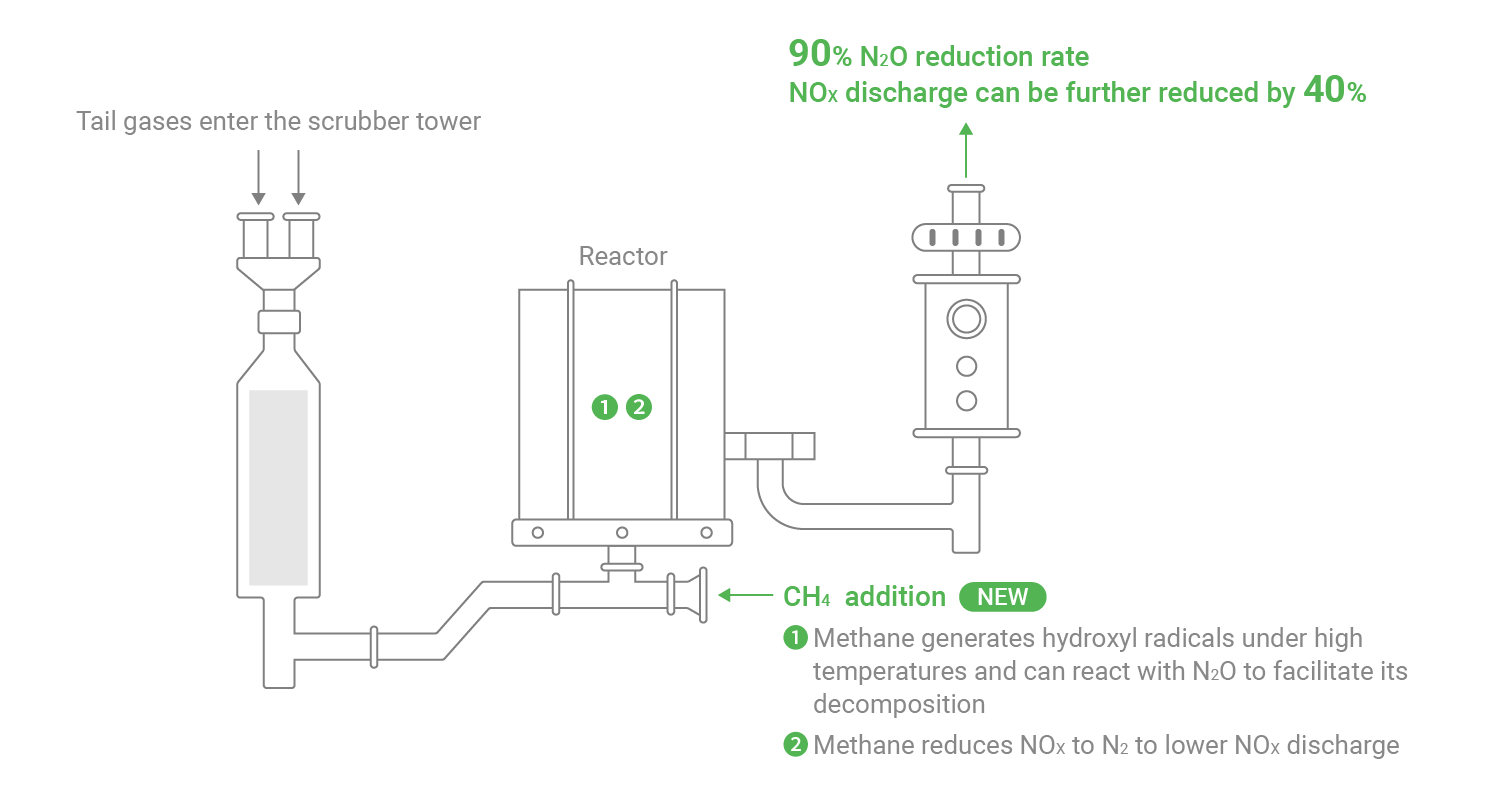
In line with its commitment to the Environmental Policy, TSMC is actively implementing a N2O abatement project. This initiative aims to enhance the effectiveness of pollution control equipment and improve environmental quality. TSMC plans to complete the retrofitting or replacement of all existing on-site electric heating treatment equipment across all fabs by 2028, with the goal of comprehensively increasing the nitrous oxide abatement rate. This effort is a full commitment towards achieving the Company's net-zero emissions target.
Stay Connected
Subscribe to our newsletter for the latest updates and explore sustainability with us.
This site is protected by reCAPTCHA and the Google Privacy Policy and Terms of Service apply.