
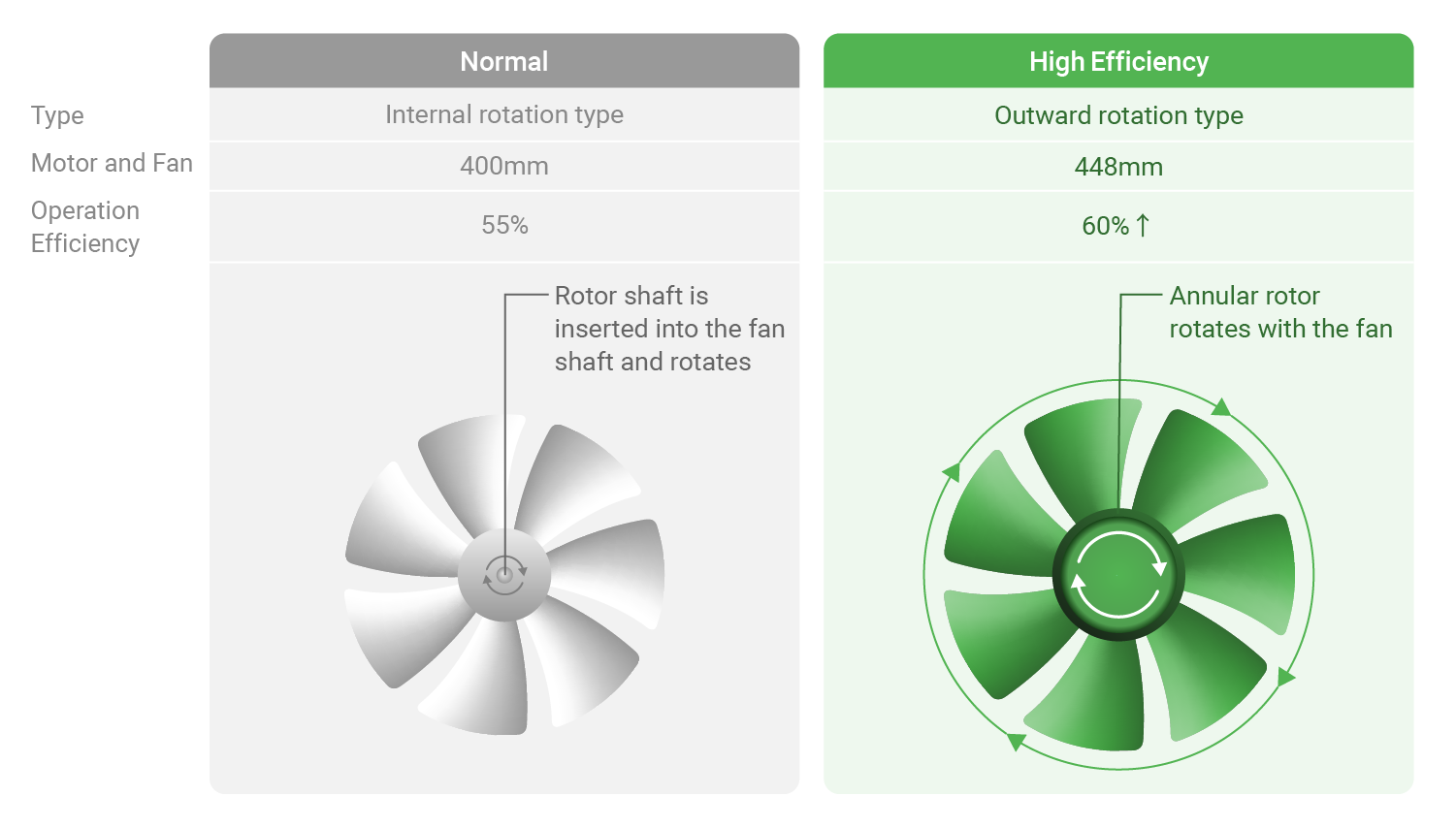
TSMC is committed to Green Manufacturing and actively identifies opportunities to save energy and reduce carbon. The company has successfully optimized the fan structure of the fan filter unit (FFU) delivering air in cleanrooms without changing the size and operating requirements, increasing efficiency from 55% to more than 60%. In real-world testing, the improvements were shown to save an average of 156 kilowatt-hours of electricity and reduce 805 tons of CO2e per year per fab. In September 2025, this technology was adopted by Fab 20 Phase 1 and Phase 2, Fab 22 Phase 1 and Phase 2, and Advanced Backend Fab 7 Phase 1 for about 44,000 fans, continuing to make green innovation into reality.
Strengthen the Torque and Fan Blade Design to Improve the Operating Efficiency
Fab cleanrooms need to keep air extremely clean, and the fan filter unit can effectively filter tiny airborne particles to ensure the quality of the manufacturing environment. To improve operational performance, TSMC optimized the design of the fan filter unit and changed the structure of the DC brushless motor from an internal to an external rotation type to enhance the torque of the shaft and ensure the high torque performance required for the operation of the fan. At the same time, the diameter of the fan blade was extended from 400 mm to 448 mm to increase the cross-sectional area of the air outlet and strengthen the stability of the airflow. In addition, combined with the Flow Field Simulation of the vortex air duct, it effectively reduces turbulence and increases air output, further improving air circulation efficiency and reducing energy consumption.
TSMC continues to expand the scope of its energy conservation initiatives, not only improving the transmission efficiency of fans but also evaluating design and material improvement plans of membrane humidifiers and air filters to test the feasibility of better energy conservation and carbon reduction. To reach its green manufacturing objectives, TSMC is optimizing the energy efficiency of its air conditioning systems while maintaining robust process stability.
Stay Connected
Subscribe to our newsletter for the latest updates and explore sustainability with us.
This site is protected by reCAPTCHA and the Google Privacy Policy and Terms of Service apply.